

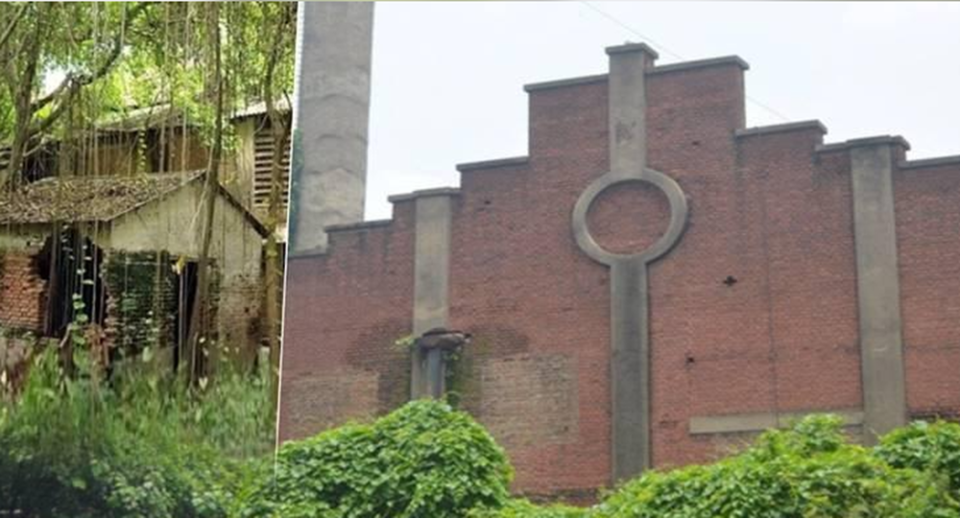
After 33 Years of Silence, Warisaliganj Will Hear the Sound of Crushing sugarcane Again
Binod Anand
-
Revival after 33 Years: Warisaliganj Sugar Mill, originally established in 1952 and closed in 1993, is set for revival through a proposed investment of over ₹500 crore by Indian Potash Limited (IPL).
-
A New Industrial Hub: The proposed Makanpur complex will integrate sugar production, ethanol distillery, power generation and biogas, creating a modern sugar-based bio-economy for Nawada and neighbouring districts.
-
Farmers as Stakeholders, Not Just Suppliers: The article advocates a Cooperative Economic Framework in which sugarcane farmers become equity-owning partners in the enterprise and participate in value creation, including revenues from ethanol, power and other by-products.
-
Regional Economic Transformation: With 1,373 villages identified across Nawada, Jamui, Sheikhpura and Nalanda as potential cane-supply areas, the project could generate local employment, revive sugarcane cultivation, strengthen rural markets and reduce distress migration.
-
Sustainable and Transparent Implementation: The revival must address water security, river conservation, transparent land acquisition, timely farmer payments and institutional farmer participation. A monitoring mechanism involving farmers and government officials is essential.
After a thirty-three-year hiatus, the rhythmic echoes of industrial activity are set to return to Warisaliganj. The iconic chimney in Nawada has stood silent for over three decades, but the Bihar government has now authorized the establishment of a contemporary sugar refinery at the site. Indian Potash Limited will lead the initiative, committing an investment exceeding ₹500 crore. The following account explores the facility’s downfall, the current commitments, and the potential for a cooperative bio-economy to revitalize the entire district.
A Forgotten Melody
I recall my childhood in Nawada, where the start of a new harvest was signaled by the persistent drone of sugarcane processing at the Warisaliganj factory. During chilly mornings, that noise would travel across the fields, accompanied by the fragrance of boiling syrup and the clatter of ox-drawn wagons lining up with their loads. To a youngster, it was the sound of home, but for the grown-ups, it represented financial security—funds for nuptials, schooling, and home improvements.
Originally established in 1952 as Mithila Sugar Works, the plant was later managed by the Bihar State Sugar Corporation before ceasing operations in 1993. I now recognize that a mill’s closure devastates the local economy. Growers lose their primary buyer, forcing them to pivot to less profitable crops or sell to jaggery producers at low prices. The workforce and supporting trades, such as tea shops and mechanics, vanish. Gradually, the expertise required for sugarcane cultivation fades; Nawada has lost its status as a major producer, and young people now migrate to Surat, Punjab, and Delhi for employment. This reflects a broader trend in Bihar, where 18 mills sat idle by 2025, 15 of which were government-owned, each draining the wealth of rural communities.
Closing the Loop
Events have come full circle. Years after the shutdown, I partnered with Shri Dileep Sanghani, the Chairman of IFFCO and Indian Potash Limited, to establish the World Cooperative Economic Forum to advocate for cooperative growth globally. Now, Indian Potash Limited is tasked with restarting the Warisaliganj mill. For me, as a Nawada local, this represents a significant challenge. The principles we champion—that farmers should possess ownership and influence—must now be proven in my own community. I am dedicated to ensuring a Cooperative Economic Framework is implemented so that farmers function as stakeholders rather than just suppliers.
A New Commitment
The restoration efforts began in late 2025 as the state sought approximately 100 acres in Nawada. By February 2026, 102 acres were identified in Makanpur mauza, consisting mostly of public land alongside 12 acres of private property. Following an April inspection, the state pledged to revive dormant mills and build twenty-five new ones in collaboration with the National Federation of Cooperative Sugar Factories. The Bihar Sugarcane Industry Investment Promotion Policy-2026, passed in June, promotes integrated facilities capable of producing sugar, power, ethanol, and biogas. Former mill sites must now meet a minimum daily crushing capacity of 3,500 tonnes.
This strategy aligns with the national “Sahkar se Samriddhi” (prosperity through cooperation) vision promoted by Union Minister Shri Amit Shah, emphasizing that farmers must own processing and marketing entities to thrive. Utilizing Indian Potash Limited, a cooperative-focused entity, to resurrect plants like Raiyam and Sakri fits this model. In October, the central government approved Indian Potash Limited for the Warisaliganj venture, with a high-level committee setting a March 2027 completion target. Chief Minister Samrat Choudhary’s cabinet approved the Makanpur location on September 23. By mid-October, 1,373 villages across Jamui, Sheikhpura, Nalanda, and Nawada were designated as suppliers. On October 28, 2026, the cabinet cleared a comprehensive complex featuring a power station and distillery, with the state covering forty percent of costs as special assistance.
While these developments are positive, several details remain vague, including the specific crushing capacity, total project expenditure, and construction schedule. Transparency regarding private land acquisition is essential. Furthermore, the scales of the distillery and biogas operations are unknown, as is the exact degree of farmer ownership in the new enterprise.
Evolving Value Chains
The industrial environment has transformed since 1952. Modern sugar hubs function as biorefineries where sugar is merely one component. Cane is processed into ethanol for fuel, bagasse generates electricity, pressmud creates biogas, and leftovers serve as fertilizer. Future possibilities include bio-packaging and sustainable aviation fuel. In this bio-economy, sugar becomes almost secondary, shielding the mill from market price shifts. Farmers stand to profit from energy and ethanol sales if the framework permits.
A Cooperative Economic Framework is vital. If farmers are organized into cooperatives with equity in the refinery, they become co-owners entitled to dividends from energy and ethanol revenue, potentially exceeding standard crop payments. Establishing trust, lost over thirty years, requires transparent and prompt electronic payments.
Adopting Successful Models
Nawada can emulate established cooperatives like the 1950-founded Pravaranagar in Ahmednagar or the Kolhapur region. In Western Uttar Pradesh, South Gujarat, and Maharashtra, sugar plants have anchored hospitals, banks, and schools, proving that farmer ownership fosters loyalty and diversification builds stability. Nawada should facilitate knowledge exchanges for growers with institutions like IIT Patna or the Vasantdada Sugar Institute in Pune.
Reinvigorating Local Farming
The facility may be finished before the local harvest is ready unless agricultural work begins immediately. A mill of this magnitude requires a robust cane culture, which must be rebuilt through awareness programs in the 1,373 target villages. Demonstration plots can introduce modern methods like mechanized harvesting and drip fertigation, proving sugarcane’s profitability over paddy or wheat. Additionally, women’s collectives could manage seed nurseries as a new revenue stream.
Existing support includes a 2026-27 fair price of ₹365 per quintal and various state subsidies for machinery and seeds. The foundation is solid, but the difficulty lies in ground-level coordination before operations commence.
Environmental and Water Issues
The project’s viability depends on water management. Unlike northern Bihar, Nawada is arid, and sugarcane is water-intensive. Illegal sand extraction in rivers like the Sakri endangers the water table, making river restoration—including desilting and mining regulation—essential. Traditional “ahar and pyne” water systems must be revived, and each village should adopt water budgeting and micro-irrigation for efficiency.
Ending Forced Displacement
A successful Makanpur complex could transform the region within a decade through modern infrastructure, rapid payments, and the local production of electricity, fuel, and organic fertilizer. Creating skilled local jobs will retain wealth and end distress migration, offering residents dignity and opportunity.
This mirrors Prime Minister Narendra Modi’s vision for “in situ” employment and “reverse migration.” By merging local job creation with Shri Amit Shah’s cooperative strategy, Nawada could serve as a prototype for Eastern India. Success requires public project details and a monitoring body of officials and farmers to oversee progress. Ideally, groundwork should conclude by 2027, with full operations by 2028 or 2029.
Advancing Toward a Developed Nation
The restoration of Warisaliganj serves as a benchmark for India’s rural strategy. The RKPA aims to boost the farmer’s share of value from fifteen to sixty percent by 2035. Success in Nawada could be replicated throughout Bihar, supporting the “Viksit Bharat 2047” objective. The project also embodies the “Panch Pran” (five resolves) by fostering a developed nation, discarding colonial mindsets through local value capture, honoring Bihar’s industrial roots, promoting unity via cooperation, and fulfilling civic duties to the land.
This represents a second opportunity for Jamui, Sheikhpura, Nalanda, and Nawada. All parties must ensure the Makanpur site becomes a beacon of cooperative achievement. I look forward to the return of the crushing sounds—not merely as a sign of industry, but as the sound of farmer empowerment.
Right of reply: every organisation and person named here is invited to respond at voricnri@gmail.com. Responses will be published in full.
