

By Binod Anand — Secretary General, Confederation of NGOs of Rural India (CNRI); Founder, World Cooperative Economic Forum (WCOOPEF) & Member(Non-official) , High Power Committee on MSP and Agri Reforms , Govt. of India
6 Minute Read
“A cooperative framework which already has IFFCO-TOKIO in the market ,does not merely change who owns the insurer — it changes how far insurance reaches, what it covers, and who ultimately benefits: the farmer, every stakeholder, and the nation.”
India’s insurance sector is large but does not reach far enough; it grows, but its growth stops at the edge of the last mile. The cooperative economic framework can change all three at once — widening the nature of what is insured, the scope of who carries and owns the risk, and the outreach to the crores still outside the net. And its benefit accrues to no single group: it flows to the farmer whose crop and cattle are covered, to every stakeholder in the cooperative chain, and to the nation, whose savings stay under Indian ownership.
The asymmetry it corrects is simple. A cultivator already co-owns the institutions of his economic life — fertiliser from IFFCO, milk sold through a union flowing up to Amul, seed from BBSSL, banking at a District Central Cooperative Bank — and at each counter the surplus he generates returns to him. Yet the moment he insures his crop, cattle, life or health, his premium pools into a company whose surplus belongs to shareholders, increasingly foreign, and never returns to the village. The framework extends to insurance the ownership principle that already works everywhere else in his economy.
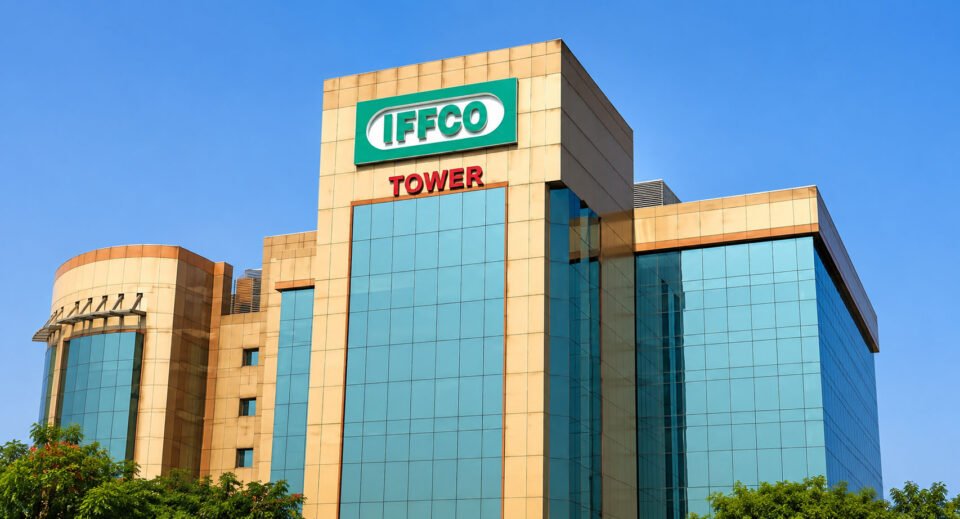
On 6 July 2026, the Ministry of Cooperation announced that a cooperative life insurance company would be established — on the lines of Bharat Taxi, drawing on the IFFCO-Tokio precedent — to deepen cooperative penetration in insurance. That single sentence opens a policy window the movement has awaited a generation.
Big, but not reaching far enough
India is the world’s tenth-largest insurance market, writing ₹11.93 lakh crore in premium against an asset pool of ₹74.44 lakh crore; insurance and pension make up nearly a third of household financial assets. Yet penetration is just 3.7 per cent of GDP and density only USD 97 per person — despite 83 lakh agents. The uncovered are rural and informal: a rupee-a-week village policy cannot carry an urban sales force’s cost, so the last mile is left uninsured — not because the risk is unpoolable, but because the shareholder model has no incentive to pool it.
The government’s own schemes prove the point. PMJJBY (27 crore enrolled), PMSBY (57 crore), Ayushman Bharat (43 crore cards) and PMFBY (₹1.94 lakh crore in claims paid) show that mass, low-ticket risk-pooling works at Indian scale. But these are State-subsidised products routed through commercial insurers, with the cooperative network used only as a passive banking correspondent. The farmer’s own institutions handle the cash but own none of the pool.
The world already insures itself this way
If any doubt remains that a member-owned sector can be large and modern, the global evidence settles it. In 2024, mutual and cooperative insurers wrote a record USD 1.61 trillion in premium worldwide — 26.1 per cent of the entire global market. More than one rupee in four of the world’s insurance flows through insurers owned by their own policyholders.
And the model dominates precisely where insurance is most advanced:
Country |
Mutual / cooperative market share |
| Austria | ~60% |
| Netherlands | ~56% |
| Finland | ~56% |
| France | ~52% |
| Germany | ~46% |
| USA | 40%+ (State Farm — world’s largest mutual) |
| Japan | 40%+ (Zenkyoren — a farmers’ cooperative) |
(ICMIF / AMICE research)
This demolishes a myth. The cooperative form is not a charity model — it is dominant in the Netherlands, Austria, Finland, France and Germany, some of the most sophisticated markets on earth. Then the number that should stop every Indian policymaker: in emerging markets, mutual insurance is just 3 per cent of premium. The developed world insures a quarter of its risk this way; the developing world barely one-thirtieth. That gap is an unbuilt market — and India, with 8.5 lakh societies and 30 crore members already organised, is the single largest opportunity within it.
What India can learn — and do faster
Every successful cooperative-insurance nation did four things right, and India can do all four faster. They scaled on a captive membership base before competing openly — and no mutual in history has begun with 30 crore members. They earned a legal home — the mutual insurer is a recognised risk-carrying form in the Netherlands, France, Germany and Japan; this is the one reform India still owes itself. They combined cost discipline with trust — and India can go further, because it possesses a digital public infrastructure stack (Aadhaar, UPI, e-PACS, Bima Sugam, the Farmer ID) that no global mutual had at inception. They globalised from a strong home base — the exact sequence India’s plan follows. What took the pioneers a century, India can compress, because every precondition already exists.
The beauties of the cooperative form
What can a member-owned insurer do that a corporate insurer structurally cannot?
The surplus comes home. In a shareholder insurer, underwriting profit and the income on the premium “float” belong to shareholders — now, under 100 per cent FDI, increasingly foreign ones. In a cooperative, that surplus returns to members as bonuses and reinvestment, by right — because its legal duty runs to the policyholder, not the shareholder.
Incentives align. A shareholder insurer profits by collecting more and paying less; a mutual’s owner is the policyholder, so it has no structural reason to mis-sell or deny a fair claim. This is why mutuals score higher on trust worldwide.
Patient capital. Answering to members, not a stock exchange, a cooperative can hold conservative reserves and stay in a hard market through a bad year — which is why mutuals dominate agricultural and catastrophe cover.
It reaches where the corporate model gives up. It rides infrastructure the community already owns — the PACS that handles the farmer’s credit, the dairy union that deducts from his milk cheque. The customer is already a member; the last mile that defeats corporate economics is the cooperative’s home ground.
None of this flows from better management — it flows from who owns the institution. The framework does not ask a corporation to behave better; it changes who it answers to.
Breaking the monopoly
The 2025 liberalisation opened Indian insurance to 100 per cent foreign ownership — meaning the deepest pool of Indian household savings can now sit in foreign-owned insurers and JVs, competing largely among themselves while the rural market stays underserved.
A cooperative pillar is the missing competitive force. It puts a structurally low-cost, high-trust rival in the field: it breaks the comfortable equilibrium among incumbents, disciplines pricing by setting a surplus-returning benchmark, and expands the market rather than dividing it by bringing in the crores the corporate model ignores. This is the UPI lesson applied to insurance — a public-cooperative rail that did not just take share from foreign card networks but collapsed transaction costs and brought in hundreds of millions. Competition is not a threat to this plan; it is the plan.
The plan, and the moment
At its centre sits a proposed apex body — Bharatiya Sahakari Bima Samiti Limited (BSBSL) — built on the BBSSL/NCEL template, promoted by IFFCO, KRIBHCO, NDDB, Amul, NAFED, NCUI and the cooperative banks, with ₹500 crore capital scaling to ₹2,000 crore. Under present law it would hold a controlling 51 per cent in a licensed insurer (the IFFCO-Tokio pattern) — life first, then general and health — while the law is amended to recognise the true cooperative insurer. Distribution builds the country’s largest insurance network without a single new office: PACS as village “Bima Mitra” points, cooperative banks as auto-debit rails, dairy unions deducting micro-premiums at source. Products span cooperative term life, PMFBY crop cover, tag-verified livestock, health mutuals and asset cover.
The timing is decisive. The Farmer ID — over 10 crore issued, each linking Aadhaar to a digitised land record — is dismantling the frictions that made rural insurance uneconomic: disputed loss assessment, delayed claims, duplicate enrolment. A cooperative insurer riding this stack can run an expense ratio below any multinational model. The technology is finally ready; what was missing was the ownership form to ride it. By Phase III (2031), the plan targets 10 crore members covered and ₹25,000 crore of premium under cooperative management — a 5 per cent sectoral share.
The leadership that makes it possible
For decades cooperators dreamed of a member-owned insurer; what is new in 2026 is the political architecture to build one. Since the Ministry of Cooperation was created in 2021 under Union Home Minister Shri Amit Shah, the sector has seen institution-building of rare pace — PACS computerisation, model bye-laws opening 25-plus lines of business, Tribhuvan Sahkari University, and national cooperatives for organics, exports and seed. Unlike the Netherlands, Japan or France, where cooperative insurance grew organically over a century, India is building this pillar deliberately and at national scale, driven from the top of government. The 6 July 2026 announcement came from the Ministry itself.
Who benefits: the farmer, every stakeholder, the nation
The benefit spreads in widening circles. The farmer gains cover that finally reaches him, claims settled faster, surplus returned as bonus. Every stakeholder gains — the PACS a new income line, the dairy and fisheries unions deeper loyalty, the cooperative banks fee income and float, the federations dividend. And the nation gains most — savings kept under Indian ownership, thousands of crores of surplus redirected into rural capital, and a sovereign third pillar as a counterweight to foreign-owned insurers.
A cooperative pillar holding even 5 per cent of the sector would turn roughly ₹60,000 crore of premium into an engine of member benefit and rural investment — widening the nature of what is insured, the scope of who owns it, and the outreach of the whole sector toward genuine insurance for all. This is expansion, not redistribution.
The farmer owns his fertiliser factory, his dairy, his seed company and his bank; now the institution that insures his life and land can join them. This is the deeper meaning of Sahkar Se Samriddhi: cooperation that widens the reach of insurance and returns its gains to the people and the country that generate them. The announcement of 6 July 2026 lit the match. Whether it becomes one company or a genuine third pillar depends on whether the movement writes the architecture now — while the window is open.
The views expressed are personal.
https://voiceofruralindia.com/farmer-id-pmfby-agristack-leakage/
The Civil Society Resilience and National Awareness Mission (CSRNAM) is a non-partisan initiative of the Confederation of NGOs of Rural India (CNRI), which holds UN ECOSOC Special Consultative Status and is an Affiliate Member of the OECD International Network on Financial Education (OECD/INFE).
