

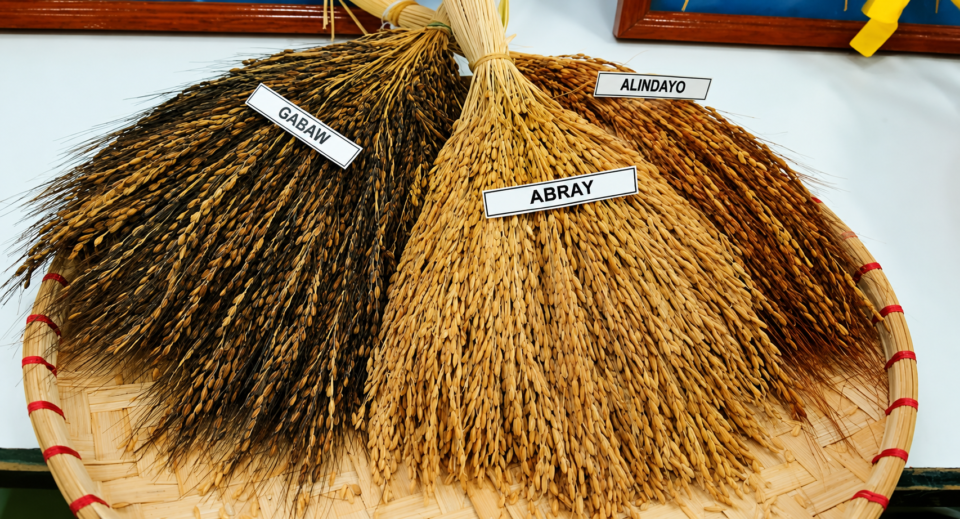
India is among the largest donors of crop germplasm on earth — over 100,000 accessions of our genetic heritage sit in the world’s genebanks. By every principle of fairness, that should make us the largest beneficiary of benefit-sharing. Instead, as the Google–IRRI project digitises the world’s rice, our genetic wealth risks becoming free data that returns to our farmers as priced, patented seed — sold by companies whose ultimate owners we have never mapped.
By Binod Anand | Voice of Rural India
Begin with the scale of what India has given the world.
No nation is self-sufficient in plant genetic resources; every crop-improvement programme on earth depends on diversity that originated somewhere else. India is a floristically and genetically rich nation. We are, in plain terms, one of the great genetic donor-nations of the planet.
It is endowed with an immense richness of PGR because of its varied geography, diverse ecosystems and a rich agricultural heritage linked with its ethnic diversity. Of the 28 million-plus accessions conserved worldwide across 446 organisations in the Genesys global portal, 100,607 — 3.78 per cent — are of Indian origin. In the international CGIAR genebanks alone, 62,920 Indian-origin accessions (8.73 per cent) now sit open to the global research community. And in the Svalbard Global Seed Vault, the planet’s ultimate safety backup, 66,339 accessions are Indian in origin — 4.85 times the average deposit of any single genebank in the world.
Most telling of all: roughly half of India’s accessions in Svalbard are traditional varieties and landraces — the trait-rich material bred by our farmers over generations that forms the backbone of any crop gene pool.
Narrow the lens to rice, and the same story sharpens. India has deposited around 15,865 accessions of paddy into IRRI’s International Rice Genebank in the Philippines — among the largest single-country contributions to the biggest rice collection on earth. Our landraces gave the world traits as fundamental as grassy-stunt-virus resistance, drawn from the wild Indian species Oryza nivara and now woven into varieties grown across continents.
The fairness that should follow — and doesn’t
There is a simple logic that ought to follow from this generosity. Under any honest Access and Benefit-Sharing (ABS) regime, the country that contributes the most to the common gene pool should receive the most in return — in research access, in commercial benefit-sharing, in recognition of the communities who conserved that diversity.
India, as one of the largest genetic contributors, should be first in the queue for benefit. It is not.
Our physical seed went into a multilateral common pool under the International Treaty on Plant Genetic Resources (ITPGRFA) — a system deliberately built for shared food security, not for paying back the country of origin. The bilateral promise of return came later, through the Nagoya Protocol under the Convention on Biological Diversity. But neither instrument was designed for the thing that is now happening to our germplasm — and that is where the real danger begins.
The instrument breaking the fairness is not a seed thief. It is a database.
From seed vault to searchable asset
In September 2023, Google.org awarded IRRI a US$2 million grant to apply artificial intelligence and high-throughput phenotyping to the rice genebank. The stated aim is admirable: identify varieties that tolerate flood, drought and salinity faster, so breeders can build climate-resilient rice. The numbers are striking — IRRI reported it could screen roughly 60,000 accessions for flood tolerance in a single year, against about 20,000 in all the decades since the genebank opened in 1972, at a fraction of the old cost.
No one should dismiss the science. But note precisely what it does. It converts a living seed into an image, a genotype, a phenotype, an environmental-response profile — and finally into an AI model that can predict which varieties hold which valuable traits. The value migrates from the seed to the information about the seed.
Here is the governance trap: our physical seed and our digital seed are not protected by the same law.
The law protects the grain, not the code
The physical exchange of germplasm is governed by the ITPGRFA and its Standard Material Transfer Agreement, which even bars recipients from claiming intellectual property over the material in the form received. The Nagoya Protocol extends ABS obligations to genetic resources more broadly. At home, India’s Biological Diversity Act, the National Biodiversity Authority and State Biodiversity Boards regulate who may take our biological material and on what terms.
Every one of these controls was designed for something physical — a truckload of seed that can be counted at a border.
None of them cleanly governs a DNA sequence, a phenotyping dataset or an AI prediction that can cross the planet at the speed of the internet. The world has itself admitted this gap: it now calls the problem Digital Sequence Information (DSI), and at COP16 in Cali governments adopted Decision 16/2 to build a multilateral benefit-sharing mechanism — including the new Cali Fund — precisely because genetic data now carry enormous commercial value in biotechnology and plant breeding.
Read that admission carefully. The world built the Cali Fund because genetic data are worth money. The question is no longer whether our diversity should be digitised. It is whether we will be paid, credited and protected when it is.
How “free data” becomes “seed we buy back”
Here is the asymmetry India must name openly.
- We supply the diversity — 100,000 accessions, half of them irreplaceable landraces.
- A research institution digitises and characterises it.
- A Western technology company supplies the AI and computing power that turns it into intelligence.
- A global database aggregates it into a searchable map of the world’s crop traits.
- A commercial breeder or biotech firm — overwhelmingly headquartered in the West — mines that map for valuable genes and builds proprietary varieties.
- The final product returns to the Indian farmer as branded, IP-protected, priced seed.
At no point is anything obviously stolen. That is exactly what makes it dangerous. Once the biological characteristics of our crops exist as data, a company no longer needs to smuggle our seed. It needs only sequence + phenotype + AI + compute — and it can conduct years of discovery without ever asking India again.
The blunt version: our own genetic heritage, contributed freely to a global common pool for the sake of food security, could be digitised, traded frictionlessly, and sold back to us as a foreign commercial product — with neither benefit-sharing nor even acknowledgement flowing to the farmers who created that diversity.
This is not an accusation that Google owns our genebank, or that diversity is being lost today. It is a warning about where the road leads if governance does not move as fast as the technology.
Follow the money — but follow it honestly
If digitised genetic data becomes commercially valuable, one question cannot be avoided: who ultimately owns the entities positioned to profit from it? This is the most important part of the inquiry — and the part where analysis most easily collapses into insinuation. It must therefore be done with unusual discipline, because a lazy version of this argument will discredit the serious one.
The honest map runs in layers. At the top sit the shareholders of the technology companies building the AI — Alphabet, Google’s parent, among them. The largest institutional shareholders of Alphabet, as of very nearly every major listed corporation, are the same small cluster of index-fund managers: BlackRock, Vanguard and State Street. Those same asset managers also sit among the largest shareholders of the world’s dominant seed, agrochemical and biotech companies. Alongside them operate private-capital and impact-investment vehicles — for instance Lightrock, the London-based private-equity platform backed by LGT, the asset-management group owned by the Princely House of Liechtenstein — which invest directly in food, agriculture and climate-technology firms and frequently take board seats in them. Below all these investors sit the operating companies: AI-agriculture start-ups, seed and genetics firms, and the commercialisation channels through which traits identified in genebanks like IRRI’s could one day reach the market.
Laid out in a single line, the chain looks damning: Google to BlackRock / Vanguard / State Street to agri-biotech to private capital such as Lightrock/LGT to AI-agriculture companies to seed and genetics firms to genebanks to commercialised genetic data.
But a straight line on a page is not proof of a hand on a lever. This is the discipline the story demands, and the reason most such exposés deserve to fail. Common shareholding is not common control. The distinctions matter, and India’s investigators must draw every one of them:
- Passive ownership is not command. BlackRock and Vanguard hold Alphabet and Bayer and Corteva because their index funds hold essentially everything in the index — mechanically, not strategically. Though Alphabet’s does not have voting control but it sits with the company’s founders through dual-class super-voting shares. “BlackRock controls a good part of Google” through index fund.
- Common exposure is not coordination. Two companies sharing the same large passive shareholder are not thereby acting together; the shareholder profits whichever way the sector moves.
- LP relationships, portfolio overlap, board seats and thematic similarity are four different strengths of connection — and each must be labelled as exactly what it is. A board seat is a real lever; a shared theme is not. Collapsing them into one is how a credible map becomes a conspiracy theory.
So the correct posture is neither naïve nor paranoid. A serious investigation names what it can actually establish — that ownership of both Big Tech and Big Agri is concentrated in a handful of the same asset managers; that impact-capital vehicles such as Lightrock are demonstrably active in food, agriculture and Indian markets and do take board seats; that the commercial incentive to convert genebank data into proprietary products is real. And it refuses to assert what it cannot yet prove: that these actors are coordinating to capture India’s genetic heritage. The value of the map is not that it exposes a cabal. It is that it shows India exactly where financial concentration exists in this ecosystem — and therefore exactly where to demand ownership disclosure, benefit-sharing guarantees and transparency, before the data layer is finished and the leverage is gone.
What India must demand — before the database is finished
Digitisation is inevitable and, done right, good for us. Surrender is not. India should press, at home and in every international forum, for a clear Genetic Data Sovereignty Framework . At first ,Digital provenance as a right. Every digitised Indian accession must carry an unbreakable chain of title — origin community → national genebank → sequencing lab → AI model → trait discovered → commercial variety → benefit-shared. Provenance must not vanish merely because a seed became a spreadsheet. Secondly,Benefit-sharing proportional to contribution. A nation that has given 100,607 accessions to the world — 4.85 times the average genebank’s deposit to Svalbard — must have a claim on the Cali Fund and any DSI mechanism that reflects what it gave. Not a token; a proportionate share.
Third,Ownership transparency across the value chain. Any institution commercialising traits derived from Indian-origin germplasm should be required to disclose its beneficial ownership. India cannot negotiate benefit-sharing with entities whose ultimate owners it has never mapped.Fourth ,Public-interest openness, commercial-use conditions. Data should stay freely open for public research, universities and food-security programmes, while commercial exploitation, patents and proprietary AI products carry explicit terms. Fifth ,Sovereign Indian AI capacity. We must build the compute and databases to analyse our own genetic wealth — so India is a decision-maker in the bioeconomy, not merely a supplier of raw genetic data to foreign platforms. At last but not least ,Farmer recognition, permanently encoded. Where diversity originates in farmer-maintained landraces and traditional knowledge, those communities must remain visible in the data, not erased from it.
For generations, our farmers guarded India’s genetic wealth by guarding living seed. The twenty-first century demands that we guard two things at once — the seed, and the information derived from the seed. In the language of Viksit Bharat and Atmanirbhar Bharat, this is not sentiment; it is strategic economics. The future of food security may run on artificial intelligence. But the future of genetic sovereignty will be decided by whether India writes the rules — on provenance, ownership and benefit — before our biological heritage becomes fully searchable, computable and, ultimately, sellable back to us.
We gave the world its seeds. We must not be made to buy them back.
The author is Secretary General of the Confederation of NGOs of Rural India (CNRI) and Founder of the World Cooperative Economic Forum (WCOOPEF). Views are personal.
